







Register to get free articles
Want unlimited access? View Plans
Already have an account? Sign in
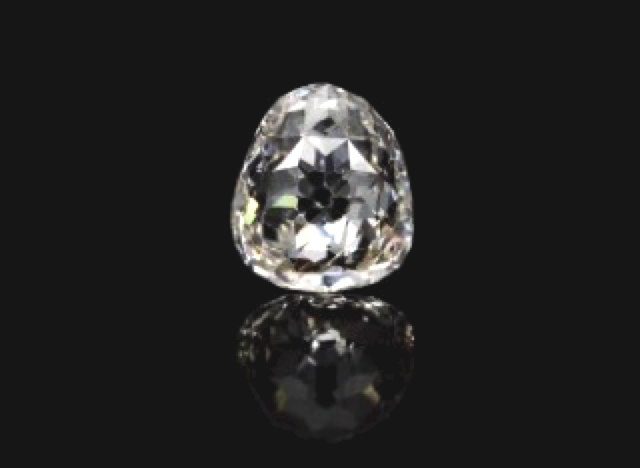
Passed down through the royal families of France, England, Prussia and the House of Orange, the diamond “has been the witness of 400 years of European history,” said Sotheby’s. Weighing 34.98 carats, the modified pear double rose cut diamond has an estimated value of $2 to 4 million (£1.24 to 2.48 million).
Commenting on the forthcoming sale of the Beau Sancy, David Bennett, chairman of Sotheby’s Jewellery Department in Europe and the Middle East, and co-chairman of Sotheby’s Switzerland said: “The Beau Sancy is one of the most fascinating and romantic gems ever to appear at auction and it is an immense privilege for Sotheby’s to handle the sale.”
Acquired by Nicolas de Harlay, Lord of Sancy in the mid to late 1500s, the Beau Sancy is most likely to have originated from the mines in south-central India. In 1604, the Beau Sancy was bought by Henri IV and gifted to his wife, Marie de Medici. Following Henri IV’s assassination by Ravaillac, the Queen was exiled, her possessions were sold and the Beau Sancy was acquired by Prince Frederick Hendrick of Orange-Nassau in 1641. The diamond was used to seal the arrangement of the wedding of Frederick Hendrick’s son, Willem, to Mary Stuart, daughter of Charles I of England and Henriette-Marie of France.
Most recently it was inherited by the grandson of Prince Louis Ferdinand, Georg Friedrich. The diamond has been shown publicly only four times in the last 50 years; first in 1972 in Helsinki; then in Hamburg in 1985; in 2001 in Paris at the Musée National d’Histoire Naturelle; and finally in Munich in 2004.